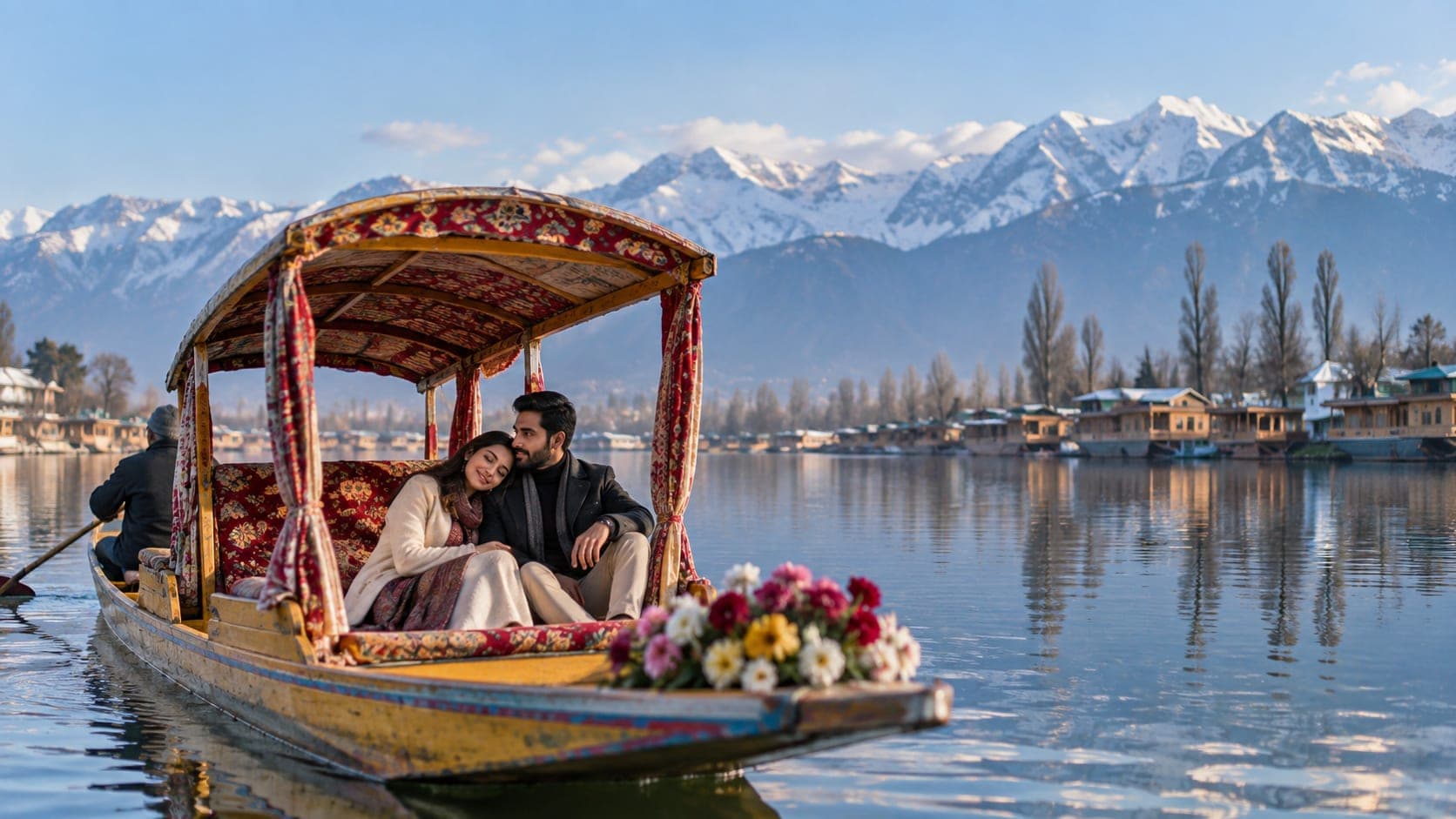
For years, Srinagar Kashmir tourism meant focusing on the same familiar names: Srinagar, Gulmarg, Pahalgam and Sonmarg.
But in 2026, the way travellers are exploring Kashmir is beginning to change.
Instead of spending the entire trip around the usual tourist circuit, more travellers are looking for quieter valleys, village experiences, adventure activities and places that still feel untouched.
In fact, the Jammu & Kashmir government is actively developing lesser-known destinations to spread Jammu and Kashmir tourism beyond the traditional hotspots and encourage rural, adventure and sustainable tourism.
So, if you've already seen Kashmir's famous postcard locations, 2026 might be the year to explore the Kashmir beyond the postcard.
Gurez Valley: the Kashmir that feels far away

One of the biggest names in Kashmir's offbeat travel scene is Gurez Valley.
Surrounded by mountains and alpine landscapes, Gurez offers a completely different pace from the busy tourist centres. The valley is known for its meadows, traditional villages and dramatic mountain scenery.
And if you have extra time, continue towards Tulail, where small villages with traditional wooden houses sit among pine-covered mountains.
It's the kind of place where the journey is almost as beautiful as the destination itself.
Daksum: for travellers who want quiet
Located in south Kashmir, Daksum is one of those places that feels surprisingly removed from the usual tourist trail.
Dense coniferous forests, streams, grassy meadows and the Bringi River create a landscape that's perfect for travellers who'd rather spend the day surrounded by nature than in a crowded sightseeing spot.
The Jammu & Kashmir Tourism Department itself describes Daksum as a place beyond the well-trodden tourist circuit.
Bangus Valley: Kashmir's emerging adventure destination

Another destination gaining attention is Bangus Valley in north Kashmir.
Think wide grasslands, surrounding mountains and a landscape that feels almost untouched. The valley has increasingly been included in Kashmir's push towards developing new tourism destinations.
It's particularly interesting for travellers who want to combine nature, adventure and rural experiences rather than simply ticking off famous attractions.
Achabal & Kokernag: the heritage side of Kashmir
Not every hidden gem needs to be a remote valley.
Achabal is known for its Mughal-era garden, springs, fountains and chinar trees, while Kokernag is famous for its natural springs and surrounding landscapes.
These destinations are a reminder that Kashmir's appeal isn't only about snow and mountains. There is also a fascinating layer of Mughal heritage, gardens, springs and local culture waiting to be explored.
Botapathri: a quieter alternative near Gulmarg
If you're already planning to visit Gulmarg, consider adding Botapathri to your itinerary.
Located around 9 km from Gulmarg, Botapathri offers a quieter mountain experience surrounded by meadows and dramatic landscapes. It has also emerged as a newer destination on Kashmir's tourism map.
It's a good example of how you don't always need to travel extremely far to escape the crowds.
What's changing in Kashmir tourism in 2026?
The biggest trend is simple: Kashmir is moving beyond sightseeing.
The current tourism strategy is placing greater emphasis on eco-tourism, adventure tourism, rural tourism, wellness, heritage and homestays, while developing lesser-known destinations and encouraging greater participation from local communities.
That means future Kashmir trips could look less like Srinagar → Gulmarg → Pahalgam → Sonmarg and more like Srinagar → Gurez → Tulail → Daksum → Bangus → local villages.
The goal isn't to replace the classics. It's to experience more of what Kashmir has to offer.
Is Kashmir still worth visiting in 2026?
Absolutely.
If it's your first trip, start with the classics. But if you've already visited Kashmir or simply want a more immersive experience, then 2026 is a great time to look beyond them.
Because the next big Kashmir travel trend isn't necessarily about finding another famous viewpoint. It's about finding places where fewer people have stood before you.
Frequently asked questions
1. What are the best hidden gems in Kashmir in 2026?
Some of the destinations gaining attention include Gurez Valley, Tulail, Daksum, Bangus Valley, Achabal, Kokernag, Drangyari and Botapathri. Availability, accessibility and facilities can vary by season, so check current local conditions before travelling.
2. Is Gurez Valley worth visiting?
Yes, especially if you're looking for dramatic mountain scenery, traditional villages and a quieter experience away from Kashmir's main tourist circuit. Tulail can also be added if conditions and your itinerary allow.
3. What are the new Kashmir tourism trends in 2026?
Kashmir's tourism development is increasingly focusing on offbeat destinations, sustainable tourism, adventure activities, rural experiences, homestays, heritage and wellness tourism. The government is also working to distribute tourist activity beyond traditional hotspots.
4. Should first-time visitors skip Gulmarg and Pahalgam for hidden gems?
Not necessarily. Gulmarg, Pahalgam and Srinagar remain essential for a first Kashmir trip. Hidden gems make more sense as add-ons, or as the focus of a second trip when you want something different.
5. Is Kashmir suitable for an offbeat road trip?
Yes, but planning is important. Some lesser-known destinations have more limited infrastructure and can be affected by weather or road conditions. Build flexibility into your itinerary instead of planning every journey down to the minute.
6. Which hidden Kashmir destination is best for nature lovers?
Gurez, Tulail and Daksum are particularly appealing if your priority is mountain scenery, forests, meadows and quieter surroundings.
7. Is Kashmir tourism becoming more sustainable?
Sustainable tourism is increasingly part of the region's tourism-development strategy, alongside eco-tourism, rural tourism and community participation. The aim is to spread tourism benefits to lesser-known areas while developing them responsibly.
8. What is the best way to experience the new side of Kashmir?
Don't treat the trip as a checklist. Spend more time in individual destinations, stay in local accommodation where appropriate, try regional food, explore villages and include nature or adventure experiences.
The new Kashmir isn't about seeing more places. It's about experiencing fewer places more deeply.